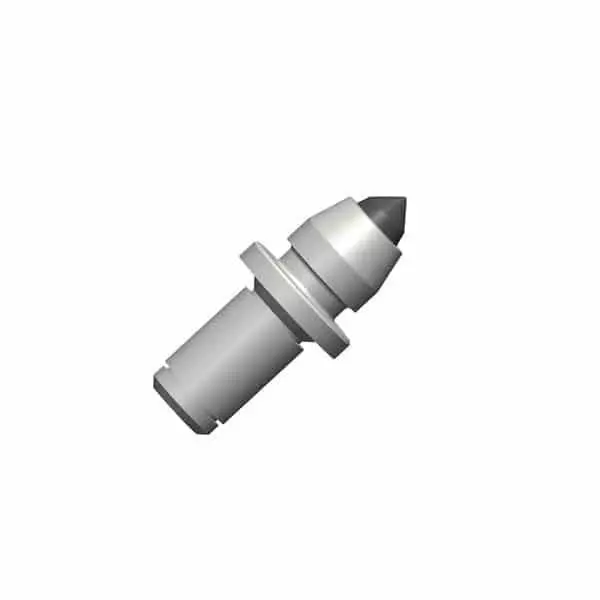
Conical Teeth
Top Categories

over 20 years’ experience and professional knowledge, technologically changes our technique, we are dedicated to provides the best Cutting and wear resistance solutions to our valued customers.
-
+86 136 0577 9141
Mon-Fri, 9am until 6pm
-
sales@jyfmachiery.com
We reply within 24 hours
-
Wencheng Economic Development Zone
Wenzhou, China.
- 1
- 2
Conical Teeth for Foundation Drilling Applications
Conical Teeth Types for Foundation Drilling

Weld-on Conical Teeth
Designed for permanent welding onto drilling tools and buckets. This type provides strong structural stability and is commonly used in heavy-duty foundation drilling applications.

Carbide-Tipped Conical Teeth
Equipped with brazed tungsten carbide inserts, these auger teeth provide outstanding resistance to abrasion and wear. They help extend service life when drilling in highly abrasive materials and reduce replacement frequency.

Replaceable Conical Teeth
These teeth are mounted on tool holders, allowing quick replacement without welding. They are widely used in projects requiring frequent maintenance and high operational efficiency.

Heavy-Duty Rock Conical Teeth
Designed for extreme drilling environments such as hard rock and compact formations. These teeth feature reinforced structures for maximum impact resistance and durability.
Applications & Ground Conditions for Conical Teeth
Applications
- Foundation Drilling Rigs
- Rotary Drilling Rigs
- Continuous Flight Augers
- Trenching Machines
- Bored Piling Equipment
- Mining & Excavation
Ground Conditions
- Hard Rock
- Mixed Soil
- Gravel & Compacted Soil
- Weathered Rock
- Reinforced Ground Layers
- Abrasive Formations
Compatibility & Mounting Systems for Conical Teeth
Mounting Systems
Round Shank
Flat Shank
Weld-on Type
Replaceable Holder System
Compatible Equipment
Foundation Drilling Rigs
Auger Drilling Equipment
Bucket Drilling Systems
Trench Cutting Machines
Rotary Drilling Rigs
FAQ
What materials are conical drilling teeth made of?
- Provides high impact resistance
- Ensures structural strength under heavy drilling loads
- Manufactured through hot die forging for improved grain structure and toughness
- Extremely high hardness (far above steel)
- Excellent wear resistance in abrasive formations
- Maintains cutting performance in rock, gravel, and compact soil
- Typical hardness: HRC 40–45 (steel body)
- Carbide insert hardness: HRA 88–92 (much higher than steel)
- Improves fatigue resistance and service life
- Ensures strong bonding between carbide and steel body
- Prevents tip detachment under impact loads
- Critical for long-term durability in hard rock drilling
What machines are compatible with conical teeth?
- Foundation drilling rigs
- Rotary drilling rigs
- Continuous Flight Auger (CFA) systems
- Trenching machines
- Bucket drilling and bored piling equipment
- Bauer
- Soilmec
- Casagrande
- Liebherr
- IMT
- Mait
- SANY
- XCMG
- Zoomlion
- Sunward
Can conical teeth be used in hard rock?
- Hard soil and compacted ground
- Weathered rock
- Mixed formations (soil + rock)
- Moderate hard rock drilling conditions
- Carbide grade and size
- Tooth body reinforcement
- Drilling pressure and machine torque
- Rock hardness level (geological conditions)
- Heavy-duty conical teeth
- Reinforced carbide-tipped designs
- Proper drilling parameters matched to the machine
What is the difference between conical teeth and flat teeth?
Conical Teeth
- Designed for hard soil, gravel, and rock formations
- Provide high penetration ability
- Break material through impact and concentrated force
- Better performance in abrasive and hard ground conditions
- Typically used in foundation drilling and rock excavation
Flat Teeth
- Designed for soft to medium soil conditions
- Provide faster cutting in loose formations
- More efficient in clay, sand, and non-abrasive ground
- Less aggressive than conical teeth
- Typically used where high penetration force is not required
How do I know when to replace conical drilling teeth?
- Drilling becomes slower than normal
- Increased torque or machine vibration
- Carbide tip is rounded, chipped, or heavily worn
- Tooth body shows cracks or deformation
- Uneven wear between teeth affecting stability