
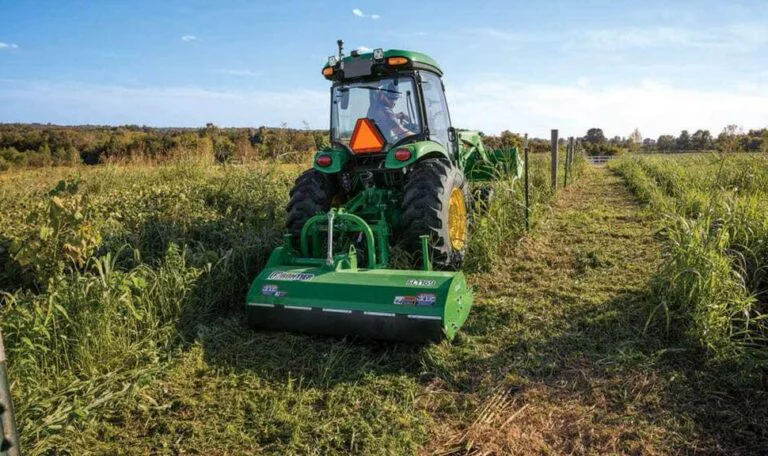
Not every PTO mulcher is suited to the same type of work. A model that handles routine grass and light brush may not be the right choice for clearing dense vegetation or heavier growth. Choosing the right machine means looking beyond its basic specifications and understanding what each type is designed to handle. The differences between PTO mulchers can help you narrow down your options before making a decision.
What Types of PTO Mulchers Are Available?
When comparing PTO mulchers, you’ll often come across light-duty, medium-duty, and heavy-duty models. The main difference is how much work they’re built to handle. A machine intended for keeping grass and light brush under control is not necessarily suitable for clearing an overgrown field. Knowing where each duty class fits makes it easier to avoid choosing a mulcher that’s either underpowered for the job or more machine than you actually need.
Light-Duty PTO Mulchers

If most of your work involves keeping grass, weeds, and light brush under control, a light-duty PTO mulcher may be all you need. These models are commonly used in orchards, small farms, and pastures where vegetation is cut regularly and hasn’t had much chance to become thick or woody.
Their lighter construction can also make them a better fit for smaller tractors. But don’t assume that any compact tractor can run one. Check the mulcher’s PTO horsepower requirement and make sure your tractor can handle its weight and lifting demands. If you regularly encounter dense brush or woody growth, a light-duty model may take too much strain and slow the job down. In that case, moving up to a medium-duty machine is worth considering.
Medium-Duty PTO Mulchers

A medium-duty PTO mulcher makes more sense when routine mowing is no longer enough. Think of fields with heavier weed growth, tangled vines, or patches of brush that need more cutting capacity than a light-duty machine can provide. These models are often used on larger farms and pastures where vegetation conditions vary from one area to another.
The trade-off is that you’ll need a tractor with enough PTO power to keep the mulcher working properly, along with sufficient weight and lifting capacity to handle the attachment. If the tractor is undersized, working through thicker vegetation can put both the tractor and mulcher under unnecessary strain. Medium-duty models are a practical middle ground, but they are not a substitute for a heavy-duty machine when the job involves consistently dense or heavy woody growth.
Heavy-Duty PTO Mulchers

For land that has been left overgrown or contains dense brush and heavier woody vegetation, a heavy-duty PTO mulcher is usually the more suitable option. These machines are built with stronger components to handle higher working loads. Their actual cutting ability still depends on the rotor, cutting tools, and the manufacturer’s rated capacity, so check what the specific model is designed to process rather than relying on the heavy-duty label alone.
Tractor compatibility becomes especially important at this level. You need enough PTO horsepower, but you also need a tractor with the weight, stability, and hitch capacity to carry and operate the mulcher safely. A tractor that meets the stated horsepower requirement may still be a poor match if it cannot handle the attachment properly. On the other hand, if you’re mainly cutting grass or maintaining lightly overgrown fields, a heavy-duty model may add unnecessary weight and cost without giving you much practical benefit.
What Should You Consider When Choosing a PTO Mulcher?
Once you have an idea of which duty class suits your work, the next step is to look at how a particular mulcher will fit your tractor and working conditions. Two models in the same category can differ in power requirements, cutting width, rotor design, and maintenance needs. These details can make a noticeable difference once you start using the machine.

Tractor Horsepower and PTO Compatibility
Start with your tractor, not the mulcher. Every PTO mulcher has specific power and connection requirements, and choosing one that exceeds your tractor’s capabilities can lead to poor cutting performance or put unnecessary strain on the equipment.
Check the manufacturer’s recommended tractor horsepower range first. Pay attention to whether the figure refers to engine horsepower or PTO horsepower, since the power available at the PTO is lower than the engine’s rated output. Also, make sure the tractor’s PTO speed matches the mulcher’s requirements. Many models are designed for a specific PTO speed, so don’t assume that a standard connection means the equipment is compatible.
There are a few other points worth checking before you buy:
-
PTO shaft and driveline: Make sure the shaft connection, spline configuration, and driveline length are compatible with your tractor.
-
Three-point hitch capacity: Check that the tractor can safely lift and support the mulcher.
-
Tractor weight and stability: A heavier attachment may require a larger, more stable tractor, particularly when working on slopes or uneven ground.
Meeting the horsepower requirement is only part of the equation. The tractor must also be able to carry and operate the attachment safely.
Vegetation and Working Conditions
Think about what you actually need to cut, rather than choosing a mulcher based only on its advertised capacity. Regularly maintaining grass and light weeds is very different from clearing an area that has become overgrown with dense brush and woody vegetation.
Consider the conditions you are likely to encounter:
-
Grass and light weeds: A lighter mulcher is generally sufficient for routine maintenance. You may not need the extra weight and cutting capacity of a heavy-duty model.
-
Dense weeds, vines, and brush: These conditions call for a machine with enough cutting capacity to process thicker, tangled vegetation without being overloaded.
-
Woody growth and overgrown land: Check the maximum material size the mulcher is rated to handle. Not every machine marketed for heavy-duty work is designed to cut small trees or thick branches.
Ground conditions matter too. Rocky or uneven terrain can increase the risk of impact damage, while slopes place additional demands on tractor stability and machine control. If your land has these conditions, look beyond cutting capacity and consider whether the mulcher is built for that type of work.
Cutting Width and Working Height
A wider mulcher can cover more ground in fewer passes, but choosing the widest model available isn’t always the best option. The cutting width needs to suit your tractor’s power, size, and the space you have to work in.
For example, a wider attachment may reduce the number of passes across an open field, but it can be harder to maneuver between orchard rows, around trees, or along narrow field edges. It also needs enough tractor power to maintain effective cutting performance across the full working width.
Working height is another detail worth checking. Adjustable skids or a rear roller, depending on the machine design, help control how close the cutting tools run to the ground. This matters when you need to avoid excessive ground contact, protect the cutting components, or leave a more consistent finish. Consider whether the adjustment range suits your terrain and the type of vegetation you want to manage.
Mulcher Teeth Type and Material
The cutting tools fitted to a PTO mulcher affect how it processes vegetation and how well they hold up under repeated impact and abrasion. Different rotor designs use different tooth shapes and mounting systems, so start by checking which teeth are compatible with the machine rather than choosing a replacement based on appearance alone.
The type of vegetation also helps determine which cutting profile is appropriate. For example, a tooth designed for cutting grass and lighter vegetation may not be the best choice for tougher brush or woody material. Check the machine manufacturer’s recommendations and the intended application of the tooth before making a decision.
Material is another consideration, particularly if the mulcher operates in abrasive conditions or encounters frequent impacts. Carbide-tipped teeth can offer greater wear resistance in suitable applications, while steel cutting tools may be appropriate for other setups. However, the material name alone doesn’t tell you how well a tooth will perform. Its construction, carbide quality where applicable, and compatibility with the rotor all matter.
Maintenance and Replacement Requirements
A PTO mulcher needs regular attention, especially when it works in dense vegetation or abrasive conditions. Before buying, consider how easy it will be to inspect the cutting tools, replace worn components, and access the parts that need routine maintenance.
A few things are worth checking:
-
Tooth replacement: Find out how the teeth are mounted and whether they can be replaced individually. Also check the availability of compatible replacement teeth.
-
Wear and damage inspection: Make sure you can easily inspect the teeth, holders, and mounting hardware. Loose or damaged components should be addressed before they cause further problems.
-
Routine servicing: Check the maintenance requirements for the gearbox, driveline, belts, bearings, and other components fitted to the machine.
-
Replacement costs: Compare the cost and availability of common wear parts, not just the initial purchase price of the mulcher.
A machine that is easy to service and has readily available replacement parts can be more practical over time, particularly if you use it regularly. Consider the maintenance involved before making your final choice, not after the first set of teeth starts to wear.
What Types of Mulcher Teeth Are Suitable for PTO Mulchers?
PTO mulchers use different cutting tools depending on the rotor design, mounting system, and type of vegetation being processed. Some use heavier hammer-style teeth to break down dense brush and woody material, while others use lighter flail blades for routine vegetation cutting. The right choice depends not only on the blade shape but also on how it is mounted and how the mulcher is designed to operate.
Hammer-Style Teeth

Hammer-style teeth have a thick, solid cutting head designed to withstand repeated impact during operation. Unlike thinner cutting blades, their heavier construction allows them to break down dense vegetation through a combination of impact and cutting action.
These teeth are commonly used for clearing thick brush, heavy grass, and woody vegetation. They are particularly useful when a PTO mulcher needs to handle overgrown areas or vegetation that would cause excessive wear on lighter cutting blades. However, the actual cutting capacity depends on the tooth design, rotor speed, and the machine’s rated limits.
When selecting replacement hammer-style teeth, don’t rely on appearance alone. Check the tooth dimensions, mounting position, and attachment method against the existing rotor and tooth holders. Even teeth with a similar shape may not fit the same mulcher.
JYF Machinery offers forestry mulcher teeth in different configurations, including hardened steel, carbide-tipped, reversible, and planer-style options. The suitable replacement depends on your equipment’s rotor system, tooth holder design, and working conditions.
Flail-Style Teeth and Blades

Flail-style cutting tools are mounted to a rotating shaft or rotor, typically through pivoting or swinging connections that allow the blades to move during operation. Their shape and weight vary according to the intended application. Lighter blades are commonly used for grass and routine vegetation maintenance, while heavier hammer-shaped blades are designed for thicker brush and more demanding cutting work.
Compared with fixed or rigidly mounted cutting tools, freely swinging flail blades can move backward when they encounter obstacles, helping reduce the impact transferred directly to the rotor. Their cutting action also depends on blade profile and weight: lighter blades are generally suited to grass and lighter growth, while heavier hammer-style blades deliver stronger impact against dense vegetation.
Before choosing replacement blades, check more than their overall shape. Blade length, width, thickness, weight, mounting-hole dimensions, and attachment hardware all affect whether a replacement will fit and operate correctly. The replacement must also be suitable for the rotor and the working conditions of your particular mulcher.
JYF Machinery supplies flail mower blade hammers for heavy-duty vegetation management. These forged steel blades use a thick hammer-style profile for cutting dense grass, brush, and light woody material. If you’re considering them for a PTO-driven machine, confirm the blade dimensions and mounting specifications against the original parts and equipment
Conclusion
The right PTO mulcher is the one that can handle your regular workload without being more machine than your tractor or operation requires. A suitable match makes it easier to maintain consistent results and avoid unnecessary strain on the equipment. Before making your final decision, consider the work you need to handle most often and choose a machine built for those conditions. This will give you a more practical setup for long-term use.