
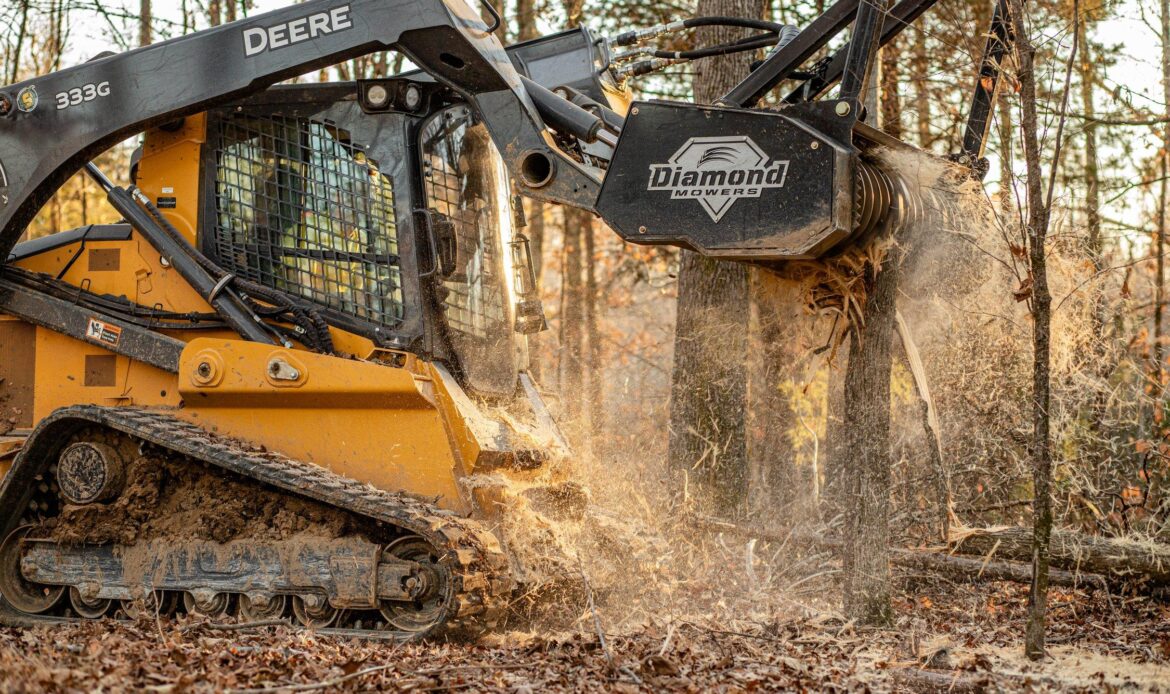
If you are wondering what a mulcher is, it is a heavy-duty machine designed to grind, shred, and recycle vegetation such as brush, branches, trees, and crop residue into mulch. Commonly used in forestry, landscaping, agriculture, and land clearing, mulchers help remove vegetation efficiently while reducing manual labor and improving productivity.
Unlike traditional clearing methods that require cutting and hauling away debris, mulchers process organic material directly on-site. In this guide, we’ll explain how a mulcher works, explore six common types, and help you choose the right machine for your project.
What Does a Mulcher Do?
A mulcher uses rotating cutting components, including teeth, hammers, or blades, to break down vegetation into smaller pieces. Instead of removing trees, branches, and brush completely, the machine converts them into organic mulch that remains on the ground.
Mulchers are commonly used for:
- Clearing forests and overgrown land
- Removing brush, shrubs, and small trees
- Processing logging residues and vegetation waste
- Maintaining roadsides, trails, and utility areas
- Preparing land for agriculture and construction
- Improving soil coverage with natural mulch
By recycling vegetation on-site, mulchers reduce cleanup work, transportation costs, and environmental impact.
Benefits of Using a Mulcher for Land Clearing
Mulchers provide several advantages for forestry, landscaping, and agricultural applications:
- Faster Land Clearing: Mulchers can process large areas of vegetation quickly compared with manual clearing methods, helping complete projects more efficiently.
- Reduced Waste and Cleanup: Instead of hauling away branches, brush, and trees, mulchers convert organic material into reusable mulch directly on-site.
- Improved Soil Health: The mulch produced during operation can help retain moisture, reduce erosion, and return nutrients to the soil.
- Lower Operating Costs: By reducing labor requirements and disposal costs, mulchers help improve overall project efficiency.
- Versatile Applications: From forestry operations to landscaping projects, mulchers can handle different vegetation types and working environments.
6 Common Types of Mulchers
Different mulchers are designed for different vegetation, terrains, and equipment requirements. The six most common types include drum mulchers, disc mulchers, flail mulchers, hammer mulchers, rotary mulchers, and chipper mulchers.
1. Drum Mulcher

Drum mulchers use a horizontal rotating drum equipped with cutting teeth to grind thick vegetation, brush, and small trees. They are commonly used for forestry mulching, right-of-way clearing, and large-scale land management projects.
With high cutting power and durable construction, drum mulchers perform well in demanding environments where heavy vegetation removal is required.
Best for:
- Dense forests
- Large-scale land clearing
- Thick brush and woody vegetation
2. Disc Mulcher

Disc mulchers use a large spinning disc fitted with cutting blades or teeth to process branches, shrubs, and small trees. They are known for fast cutting performance and are often used in landscaping and medium-duty clearing projects.
Their open design allows good visibility and easy operation in relatively open areas.
Best for:
- Brush clearing
- Shrub removal
- Landscaping applications
Drum Mulcher vs. Disc Mulcher: Key Differences
Drum mulchers and disc mulchers are both effective for vegetation clearing, but they are designed for different working conditions. The main differences are cutting design, material handling, and the type of clearing work they are best suited for.
| Feature | Drum Mulcher | Disc Mulcher |
| Cutting system | Horizontal rotating drum with cutting teeth | Spinning disc with cutting blades or teeth |
| Cutting performance | Strong performance in dense and heavy vegetation | Fast cutting in brush and lighter woody vegetation |
| Best suited for | Dense forests, thick brush, and large-scale clearing | Brush clearing, shrubs, and landscaping |
| Vegetation handled | Thick vegetation, brush, and small trees | Branches, shrubs, and small trees |
| Typical applications | Forestry mulching and demanding land clearing | Landscaping and medium-duty clearing |
The right choice depends on the vegetation, working conditions, and clearing requirements. If you want a more detailed comparison, see our guide to Drum Mulcher vs. Disc Mulcher.
3. Flail Mulcher
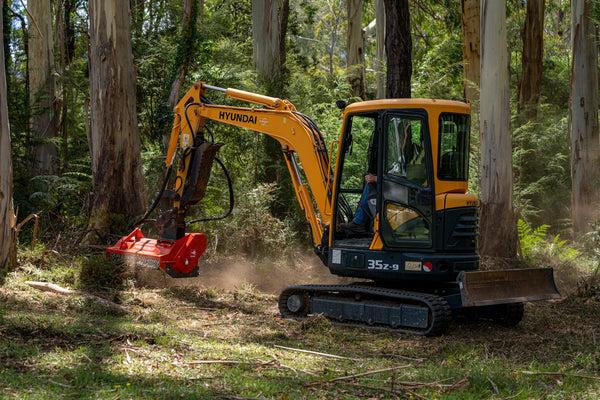
Flail mulchers feature multiple swinging blades or hammers attached to a rotating shaft. They are designed to handle grass, weeds, light brush, and uneven terrain while minimizing soil disturbance.
Because of their controlled cutting action, flail mulchers are suitable for areas where surface protection is important.
Best for:
- Grass and vegetation management
- Roadside maintenance
- Uneven terrain
4. Hammer Mulcher
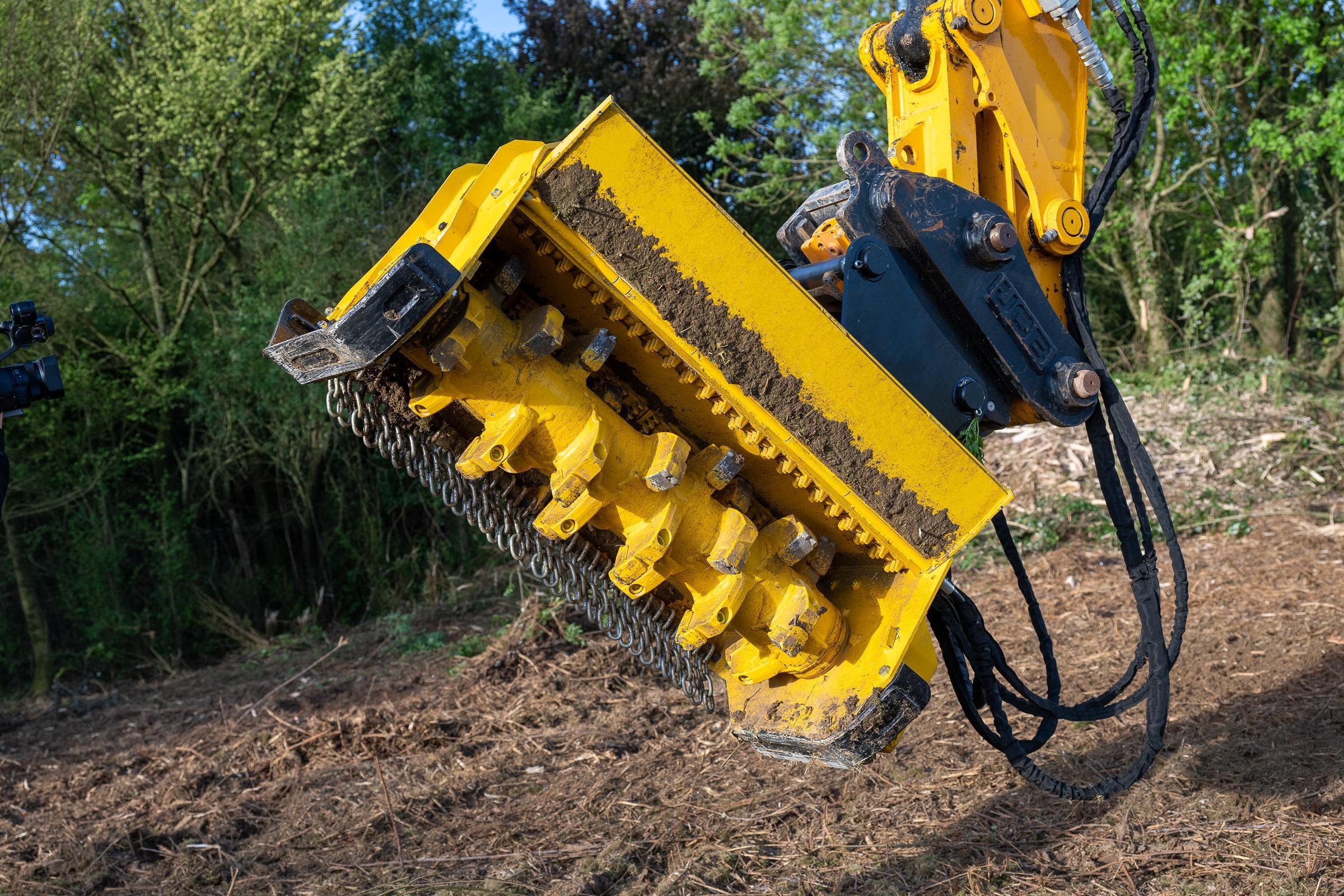
Hammer mulchers use heavy-duty hammers or flails to crush dense vegetation, branches, and small trees. Their powerful impact makes them suitable for challenging forestry and land management applications.
They are built for rugged conditions and can handle tougher materials compared with lighter mulching equipment.
Best for:
- Heavy brush
- Forestry applications
- Difficult clearing projects
5. Rotary Mulcher

Rotary mulchers use a rotating rotor equipped with cutting teeth to grind vegetation into mulch. They are versatile machines suitable for landscaping, roadside maintenance, and light forestry work.
Their flexibility makes them a popular choice for operators who need reliable performance across multiple applications.
Best for:
- Landscaping
- Vegetation maintenance
- Light forestry work
6. Chipper Mulcher

Chipper mulchers combine chipping and mulching functions to process branches, garden waste, and wood debris. They are commonly used for property maintenance and smaller-scale vegetation management. For wood processing applications, reliable wood chipper blades help maintain efficient and consistent cutting performance.
These machines help turn yard waste into reusable mulch or compost material.
Best for:
- Residential and commercial projects
- Yard cleanup
- Garden waste processing
| Mulcher Type | Best For | Main Advantage |
| Drum Mulcher | Thick brush, trees, forestry clearing | High cutting power and durability |
| Disc Mulcher | Shrubs, small trees, brush | Fast cutting and efficient clearing |
| Flail Mulcher | Grass, weeds, light vegetation | Low soil disturbance and versatility |
| Hammer Mulcher | Heavy brush and woody materials | Powerful performance in tough conditions |
| Rotary Mulcher | Landscaping and light forestry | Flexible and easy operation |
| Chipper Mulcher | Branches and yard waste | Efficient debris processing |
Why Do Mulcher Teeth Matter?
Mulcher teeth are one of the most important components of a mulcher because they directly impact cutting performance, efficiency, and machine durability. As the primary cutting tools, they determine how effectively the machine can process brush, branches, trees, and other vegetation.
High-quality mulcher teeth help improve performance by:
- Enhancing Cutting Efficiency: Sharp and durable teeth allow the mulcher to process vegetation faster with less effort.
- Improving Durability: Wear-resistant teeth can withstand tough conditions and extend service life.
- Reducing Maintenance Costs: Longer-lasting teeth reduce replacement frequency and machine downtime.
- Protecting the Machine: Properly designed teeth reduce stress on other components and improve overall reliability.
- Maintaining Consistent Results: Quality teeth ensure smoother operation and uniform mulch output.

Carbide Mulcher Teeth from JYF Machinery
JYF Machinery provides high-quality mulcher teeth designed for forestry mulchers, skid steer mulchers, and land clearing equipment. Our teeth are engineered for durability, efficient cutting, and long service life in demanding environments.
Key Features of JYF Mulcher Teeth:
- High-strength materials: Built to withstand heavy-duty mulching operations.
- Carbide cutting tips: Provide excellent wear resistance and cutting performance.
- Precision manufacturing: Designed for efficient vegetation processing.
- Wide compatibility: Suitable for various drum, flail, rotary, and hammer mulchers.
- Long service life: Helps reduce replacement frequency and maintenance costs.
- Easy installation: Designed for quick replacement and reduced downtime.
Choosing reliable mulcher teeth helps operators improve productivity, maintain consistent performance, and achieve better results in forestry, landscaping, and agricultural projects.
How to Choose the Right Mulcher
Choosing the right mulcher depends on your vegetation type, equipment compatibility, working conditions, and cutting requirements. Since mulcher teeth are the primary cutting components, their quality plays a key role in machine performance, efficiency, and operating costs.
1. Choose High-Quality Mulcher Teeth
Mulcher teeth directly affect cutting speed, productivity, and maintenance costs. Durable carbide-tipped teeth provide excellent wear resistance and help maintain cutting performance when processing brush, trees, and other tough materials. High-quality teeth also reduce replacement frequency and minimize downtime. JYF Machinery offers premium carbide mulcher teeth designed for reliable cutting performance, long service life, and demanding forestry and land clearing applications.
2. Consider the Type of Vegetation
Different mulchers are designed for different materials. Flail or rotary mulchers are suitable for grass, weeds, and light vegetation, while drum and hammer mulchers are better for thick brush, small trees, and dense forestry materials. Choosing the right mulcher type ensures efficient processing and better results.
3. Match the Mulcher with Your Equipment
Mulchers are available for skid steers, excavators, tractors, and forestry carriers. Make sure the attachment size, hydraulic flow, and mounting system are compatible with your equipment to achieve safe and efficient operation.
4. Evaluate Your Working Conditions
Consider terrain, project size, and material hardness before selecting a mulcher. Heavy-duty forestry and land clearing projects require machines with strong construction and durable components, while landscaping tasks may need more compact and versatile solutions.
5. Consider Long-Term Performance
A reliable mulcher should deliver consistent performance while reducing maintenance costs. Choosing equipment with durable construction and high-quality components, especially wear-resistant mulcher teeth, can improve productivity and extend service life over time.
Conclusion
Understanding what a mulcher is helps you choose the right equipment for forestry, landscaping, agriculture, and land clearing projects. From drum and hammer mulchers to flail and chipper models, each type offers unique advantages for different applications. Since mulcher teeth play a key role in cutting performance and durability, selecting high-quality teeth is essential. JYF Machinery provides reliable carbide mulcher teeth designed for efficiency, long service life, and consistent performance. Contact JYF Machinery to find the right solution for your mulching needs. |
FAQs About Mulchers
1. What type of mulcher is best for forestry?
Drum mulchers and hammer mulchers are commonly used for forestry applications because they provide high cutting power and can handle thick brush, small trees, stumps, and dense vegetation. The right choice depends on the project size, terrain, and material hardness.
2. How long do mulcher teeth last?
The lifespan of mulcher teeth depends on factors such as vegetation type, working conditions, machine power, and maintenance. High-quality carbide-tipped mulcher teeth generally provide longer wear resistance and better performance in demanding forestry and land clearing applications.
3. What is the difference between a mulcher and a chipper?
A mulcher grinds and processes vegetation directly on-site, turning brush, trees, and organic materials into mulch. A chipper mainly cuts branches and wood into smaller chips, which are usually collected or transported for further use.
4. How often should mulcher teeth be replaced?
Mulcher teeth should be replaced when they become worn, damaged, or lose cutting efficiency. Regular inspection helps identify wear early. Using durable teeth, such as carbide mulcher teeth from JYF Machinery, can reduce replacement frequency and minimize machine downtime.