
Forestry mulching is a land-clearing process that uses a specialized machine to cut, grind, and shred trees, brush, and vegetation into mulch directly on-site. Unlike traditional land-clearing methods that require cutting, hauling, and disposing of debris, forestry mulching completes the entire process in a single step.
The resulting mulch layer remains on the ground, helping reduce soil erosion, retain moisture, suppress weed growth, and improve soil health. Because of its efficiency and environmental benefits, forestry mulching has become a preferred solution for land development, agricultural management, right-of-way maintenance, and wildfire prevention.
Types of Forestry Mulchers
Forestry mulchers come in several configurations, each designed for specific applications and carrier machines:
- Skid Steer Forestry Mulchers – Ideal for small to medium land-clearing projects where maneuverability is important.
- Excavator Forestry Mulchers – Provide extended reach for working on slopes, riverbanks, and hard-to-access areas.
- PTO Forestry Mulchers – Powered by tractors and commonly used in agricultural and pasture management applications.
- Dedicated Forestry Mulchers – Purpose-built machines designed for large-scale and heavy-duty vegetation management.
- Drum Mulchers – Produce finer mulch and excel in dense vegetation.
- Disc Mulchers – Offer faster tree-cutting capabilities and high productivity.
Choosing the right forestry mulcher depends on vegetation density, terrain, machine compatibility, and project objectives.
How a Forestry Mulcher Machine Works Step by Step
A forestry mulcher machine efficiently converts trees, brush, and vegetation into mulch through a continuous cutting and grinding process. Understanding how the machine works can help operators maximize productivity and maintain optimal performance.
Step 1: Powering the Mulching Head
The process begins when the carrier machine—such as a skid steer, excavator, tractor, or dedicated forestry mulcher—delivers hydraulic or mechanical power to the mulching head. This power rotates the drum or disc equipped with mulcher teeth at high speeds.
Step 2: Cutting the Vegetation
As the rotor spins, the mulcher teeth make contact with trees, brush, and undergrowth. The teeth slice, chip, and break down the vegetation into smaller pieces. Depending on the machine’s power and tooth design, forestry mulchers can process everything from light brush to large-diameter trees.
Step 3: Grinding and Shredding the Material
After the initial cut, the vegetation is repeatedly struck by the rotating teeth inside the mulching chamber. This grinding action further reduces the material into smaller wood chips and mulch. Drum mulchers are particularly effective at producing fine, uniform mulch through this repeated processing.
Step 4: Discharging the Mulch
Once the material reaches the desired size, it is expelled from the mulching head and distributed across the ground. The resulting mulch forms a protective layer that can help reduce erosion, suppress weed growth, and improve soil moisture retention.
Step 5: Continuing the Land-Clearing Process
The operator then advances the machine to the next section of vegetation and repeats the process. Because forestry mulchers cut and mulch in a single pass, they eliminate the need for collecting, transporting, or burning debris, significantly improving land-clearing efficiency.
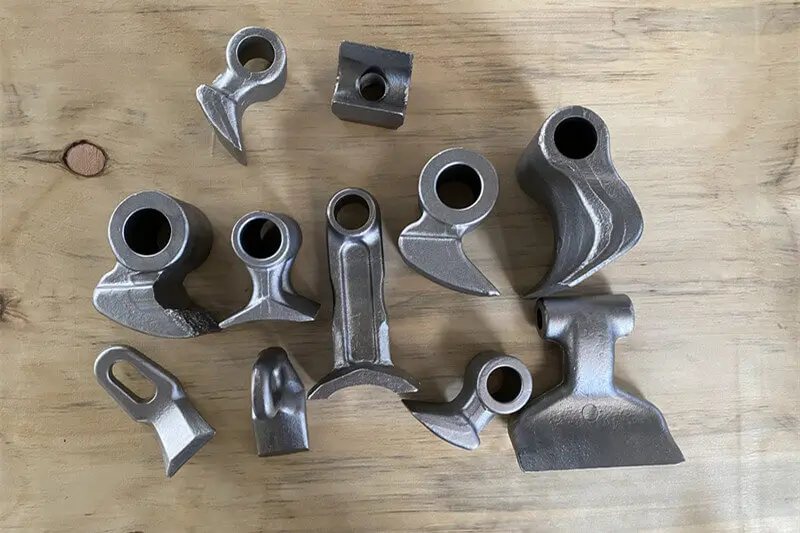
How Mulcher Teeth Affect Forestry Mulching Performance
Mulcher teeth are the most important wear parts on a forestry mulcher and directly influence machine productivity.
- Improve cutting speed and efficiency
- Reduce fuel consumption
- Produce finer, more uniform mulch
- Increase productivity in dense vegetation
- Extend machine life
- Reduce downtime and maintenance costs
- Improve performance in rocky and abrasive conditions
- Enhance operational safety
Because mulcher teeth are the primary cutting components, their quality can significantly affect overall project costs and performance.
How Forestry Mulching Helps Wildfire Prevention
Wildfires have become an increasing concern in many regions, especially in areas with dense vegetation and prolonged dry seasons. Forestry mulching is widely recognized as an effective land management practice that helps reduce wildfire risks by removing excess vegetation and creating natural fire barriers.
Reduces Fuel Loads
One of the primary causes of rapidly spreading wildfires is the accumulation of combustible vegetation, often referred to as “fuel loads.” Forestry mulchers efficiently remove brush, dead trees, invasive plants, and dense undergrowth that can ignite easily. By reducing the amount of available fuel, forestry mulching lowers the intensity and spread of potential wildfires.
Eliminates Ladder Fuels
Ladder fuels are low-growing vegetation, shrubs, and small trees that allow ground fires to climb into the forest canopy. Once a fire reaches the treetops, it can spread much faster and become far more difficult to control. Forestry mulching removes these intermediate fuel sources, helping prevent surface fires from developing into dangerous crown fires.
Creates Defensible Space
Forestry mulching is commonly used to establish defensible space around homes, commercial properties, utility corridors, and critical infrastructure. By clearing vegetation near structures, it creates a buffer zone that can slow or stop the advance of wildfire and provide firefighters with safer access during emergency response operations.
Supports Firebreak Construction
Land managers often use forestry mulchers to create and maintain firebreaks—strategically cleared strips of land designed to interrupt the path of a wildfire. These firebreaks reduce the continuity of combustible vegetation and can help contain fires before they spread to larger areas.
Improves Forest Health
Overgrown forests are more susceptible to drought stress, pest infestations, and disease, all of which can increase wildfire risks. Forestry mulching helps thin dense vegetation, allowing remaining trees to access more sunlight, water, and nutrients. Healthier forests are generally more resilient to both wildfire and environmental stress.
Provides an Environmentally Friendly Alternative
Unlike burning or hauling vegetation off-site, forestry mulching processes vegetation directly into mulch that remains on the ground. The mulch helps protect soil from erosion, retains moisture, and gradually decomposes into organic matter, supporting long-term ecosystem health while reducing wildfire hazards.
Forestry Mulching vs Traditional Land Clearing Methods
When planning a land-clearing project, property owners often compare forestry mulching with traditional methods such as bulldozing, burning, and manual clearing. While each approach has its place, forestry mulching has gained popularity because it combines vegetation removal and debris processing into a single operation.
The following table highlights the key differences:
| Factor | Forestry Mulching | Bulldozing | Burning | Manual Clearing |
| Debris Handling | Mulched on-site | Removed off-site | Burned to ash | Collected and removed |
| Soil Disturbance | Low | High | Moderate | Low |
| Erosion Risk | Low | High | Moderate | Low |
| Environmental Impact | Eco-friendly | Soil disruption | Smoke emissions | Low impact |
| Speed | Fast | Fast | Moderate | Slow |
| Labor Requirement | Low | Moderate | Moderate | High |
| Cost Efficiency | High | Moderate | Moderate | Low |
| Best Applications | Land clearing, vegetation management | Site preparation | Residue disposal | Small-scale clearing |
| Best Applications | Vegetation management, wildfire prevention, right-of-way maintenance, land reclamation | Site preparation and large-scale earthmoving | Agricultural residue disposal and controlled burns | Small properties and selective vegetation removal |
Why Many Landowners Choose Forestry Mulching
Forestry mulching offers several advantages over traditional land-clearing methods. Because vegetation is processed directly into mulch, there is no need for costly hauling, burning, or disposal. The resulting mulch helps protect the soil, retain moisture, and reduce erosion, making it a more sustainable solution for long-term land management.
In addition, forestry mulchers can work efficiently in areas where bulldozers may cause excessive ground disturbance or where burning is restricted due to environmental regulations. This combination of productivity, environmental benefits, and reduced cleanup requirements has made forestry mulching one of the preferred vegetation management methods for landowners, contractors, utility companies, and forestry professionals.
To maximize these benefits, operators should ensure their forestry mulcher is equipped with high-quality mulcher teeth. Durable carbide forestry mulcher teeth improve cutting efficiency, reduce downtime, and help maintain consistent performance across demanding land-clearing applications.
How to Choose the Right Forestry Mulcher Teeth
Choosing the right forestry mulcher teeth is essential for maximizing cutting performance, reducing operating costs, and extending equipment life. The ideal tooth depends on your machine, working conditions, and the type of vegetation you need to process.
Consider the Type of Vegetation
Different vegetation requires different cutting characteristics.
- Light brush and softwood – Standard carbide teeth provide excellent cutting speed and durability.
- Dense brush and mixed vegetation – Heavy-duty carbide teeth offer a balance of aggressive cutting and wear resistance.
- Hardwoods and large trees – Premium carbide mulcher teeth are recommended for maximum durability and productivity.
- Stump grinding applications – Specialized stump grinder teeth may be more suitable than standard forestry mulcher teeth.
Evaluate Ground Conditions
The terrain can significantly affect tooth wear.
- Rocky terrain – Choose high-wear-resistant carbide teeth to withstand impact and abrasion.
- Sandy or abrasive soils – Premium carbide tips help extend service life.
- Soft soil conditions – Standard carbide teeth may provide sufficient performance while reducing operating costs.
Match the Teeth to Your Mulcher Type
Different rotor designs require specific tooth configurations.
| Mulcher Type | Recommended Teeth Characteristics |
| Drum Mulchers | Durable carbide teeth for continuous grinding and fine mulch production |
| Disc Mulchers | Aggressive cutting teeth designed for rapid tree processing |
| Fixed-Tooth Rotors | Heavy-duty carbide teeth with maximum wear resistance |
| Swing Hammer Systems | Impact-resistant teeth designed for flexibility and debris handling |
Always verify compatibility with your rotor system and equipment manufacturer specifications.
Consider Productivity Requirements
If your operation involves large-scale land clearing or commercial forestry work, investing in premium carbide forestry mulcher teeth can provide significant long-term savings.
Benefits include:
- Longer service life
- Less downtime for tooth replacement
- Lower maintenance costs
- Improved fuel efficiency
- Consistent cutting performance
For occasional or light-duty use, standard carbide teeth may offer a more economical solution.
Conclusion: Choose JYF Forestry Mulcher Teeth
Forestry mulching is a fast, efficient, and environmentally friendly way to manage vegetation and clear land. To achieve the best results, it’s essential to use high-quality mulcher teeth that deliver reliable cutting performance and long service life.
JYF Machinery’s premium carbide forestry mulcher teeth are designed to maximize productivity, reduce downtime, and withstand the toughest working conditions. Whether you’re tackling brush, trees, or large-scale land-clearing projects, JYF provides the durability and performance professionals depend on.
Frequently Asked Questions
What is forestry mulching used for?
Forestry mulching is used to clear and manage vegetation without the need for hauling or burning debris. Common applications include land development, site preparation, agricultural land reclamation, utility corridor maintenance, trail clearing, invasive species control, and wildfire prevention. It is an efficient solution for both residential and commercial land-management projects.
Can forestry mulchers remove tree stumps?
Yes, many forestry mulchers can grind tree stumps close to or slightly below ground level, depending on the machine’s power, rotor design, and tooth configuration. While forestry mulchers are primarily designed for vegetation management, they can effectively process smaller stumps and surface roots as part of a land-clearing operation.
What is the difference between drum and disc mulchers?
Drum mulchers use a rotating drum fitted with mulcher teeth to grind vegetation into fine, uniform mulch. They are ideal for dense brush and continuous mulching applications. Disc mulchers use a large spinning disc to quickly cut standing trees and woody vegetation, offering higher cutting speeds but typically producing coarser mulch.